
Who runs the system in Utah,
and who holds the funding.
A working reference for executive directors, program managers, and grant writers in child abuse prevention, foster care, domestic violence, and behavioral health. System contacts, funding administrators, the rules, and the data, verified, dated, in one place.
System contacts
The agencies and networks that run Utah's child- and family-serving systems. Structure note: Utah is a state-administered child welfare system, one statewide agency, not county-run.
Utah Division of Child and Family Services (DCFS)
Under the Utah Department of Health & Human Services. State office: 195 North 1950 West, Salt Lake City · (801) 538-4100.
Verified Aug 2026Utah Children's Justice Centers
22 CJCs statewide, administered through the Utah Attorney General's Office CJC Program.
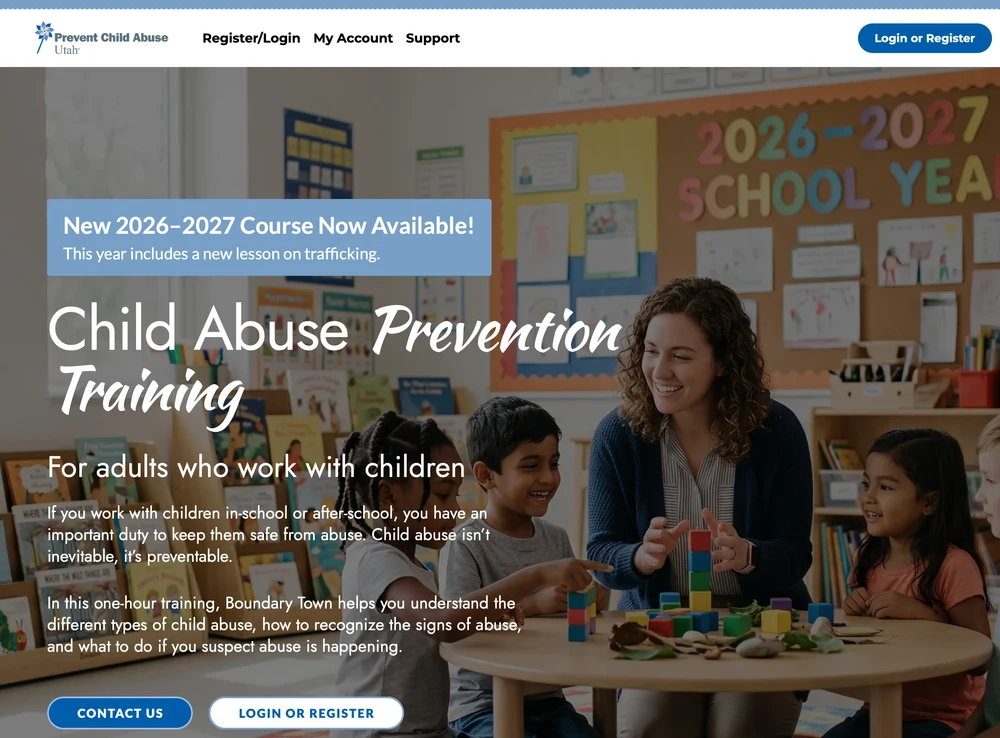
Verified Aug 2026Prevent Child Abuse Utah
Utah's PCA America chapter. Statewide prevention education, home visiting support, and the state's leading voice on the reporting law.
Partner spotlightUtah Domestic Violence Coalition
Statewide coalition and NNEDV member. The system-level contact for DV programs; individual programs are listed only in the family-facing directory, by design.
Partner spotlightUtah DHHS, Office of Substance Use and Mental Health
State behavioral health authority; oversees local mental health and substance use authorities in each county.
Pending verificationUtah Office of Licensing (DHHS)
Licenses foster homes and child-placing agencies. Foster parent recruitment runs through Utah Foster Care, a contracted nonprofit, an unusual model worth knowing.
Pending verificationUtah DHHS, Home Visiting Program
Within the Office of Early Childhood. Supports local health departments and nonprofit agencies delivering evidence-based home visiting, using state and federal funding.
Verified Oct 3, 2026Funding, who administers what
The state administrators for the federal streams most organizations in this sector touch. Deadlines for these streams appear in the Funding Deadline Tracker.
Utah Office for Victims of Crime (UOVC)
Division of the Utah Commission on Criminal and Juvenile Justice. 350 E 500 S, Suite 200, Salt Lake City · 801-238-2360. Awarded over $21 million in grants in FY2024. The 2025–2027 VOCA cycle application closed March 13, 2025, next cycle expected 2027.
Verified Aug 2026Utah DCFS, Domestic Violence Program
FVPSA federal funds flow through DCFS for DV services and treatment in Utah, per the state's Victim Services Overview Report.
Verified Aug 2026UOVC (same office as VOCA)
UOVC administers the S.T.O.P. Violence Against Women formula grant under its published implementation plan.
Verified Aug 2026Lead agency, to be confirmed
Utah's CBCAP lead agency assignment is being verified against the current ACF state lead list before we publish it.
Pending verificationUtah Victim Service Program (UVSP)
State-funded grant program administered by UOVC, separate from federal VOCA, a stream many out-of-state guides miss.
Verified Aug 2026Utah Department of Health and Human Services
HHS records a $6,047,097 FY2026 award dated September 24, 2026. MIECHV supports voluntary home visiting for pregnant women and families with young children.
Verified Oct 3, 2026MIECHV: support that starts with families.
The Maternal, Infant, and Early Childhood Home Visiting (MIECHV) Program funds voluntary, evidence-based support during pregnancy and early childhood. Trained home visitors partner with families on healthy development, positive parenting, school readiness, and connections to community resources. HRSA program overview.
Utah’s reach
Federal fiscal year 2025Source: HRSA MIECHV Outcomes Dashboard and its FY2025 Size and Reach dataset (XLSX), updated June 4, 2026. These figures cover MIECHV-funded services, not all home visiting in Utah.
From federal awards to local services.
- FY2026 award
- $6,047,097
- FY2025 base funding
- $4,185,884
- FY2025 federal matching funds
- $1,211,095
- FY2025 total award
- $5,396,979
The FY2026 award was issued September 24, 2026; service figures above describe FY2025. Sources: HHS TAGGS, award X1055793 and HRSA FY2025 awards.
Federal matching funds require $1 in non-federal support for every $3 in federal funds. MIECHV awards go to eligible state and jurisdiction recipients; local organizations should connect with Utah’s program office about participation.
Utah DHHS connects the network.
Utah’s Home Visiting Program sits within the Office of Early Childhood and supports local health departments and nonprofit providers. Utah’s FY2025 MIECHV data lists Parents as Teachers and Nurse-Family Partnership.
What programs measure
HRSA tracks 19 performance measures across six benchmark areas, including maternal and child health, child safety, school readiness, family economic well-being, domestic violence, and service coordination. Awardees must demonstrate improvement in at least four areas.
MIECHV-funded programs delivered more than 1 million visits and reached approximately 158,000 children and parents nationwide. HRSA’s June 23, 2026 data release.
MIECHV information and linked data checked October 3, 2026.
Rules
The statutory facts an organization operating in Utah has to get right.
Mandated reporting: universal, every adult
Utah law requires any person who has reason to believe a child has been subjected to abuse or neglect to immediately notify DCFS, a peace officer, or law enforcement. This is broader than professional-only states: every staff member and volunteer at your organization is a mandated reporter, and failure to report can carry criminal penalty. Narrow exemptions exist for clergy (confession bound by canon law) and attorneys under professional conduct rules.
Utah Code § 80-2-602 (recodified from § 62A-4a-403). Verified Aug 2026 against RAINN's state law database and Utah DCFS.
Newborn substance exposure reporting
Health care providers attending a birth must report determinations of fetal alcohol syndrome/spectrum disorder or drug dependency to DCFS.
Utah Code § 80-2-603. Verified Aug 2026.
Vulnerable adult reporting
Any person with reason to believe a vulnerable adult is being abused, neglected, or exploited must notify Adult Protective Services or law enforcement, relevant to DV and behavioral health programs serving adults.
Utah Code § 26B-6-205. Verified Aug 2026.
Family First (FFPSA) prevention plan
Utah's Title IV-E prevention plan status and approval year are being re-verified against the current Children's Bureau approvals list before publication.
Pending verification
Data snapshot
Utah's headline numbers from the sources the Sector Data Map maintains. Each links to its origin.
See Utah on the map
Every organization in Utah's child- and family-serving network, with service tags and coverage, plus the tools that turn these numbers into board-ready answers.
About this page. Part of the Mophead Media Operator's Directory, one page per state for the people who run child- and family-serving organizations. Listings are system-level by design: domestic violence entries appear at the coalition level only, never individual shelters or addresses. Facts marked "Verified" were checked against primary sources on the date shown; "Pending verification" means we will not publish a value until we've confirmed it. Corrections: hello@mopheadmedia.com. Last full review: August 2026. MIECHV section and home visiting listings updated October 3, 2026.