Research that informs our perspective
Strong relationships.
A foundation for development.
Early childhood research helps explain why the relationship matters. Our role is to build thoughtful tools around the professionals who put that knowledge into practice.
01Responsive relationships.
The back-and-forth exchanges between a child and a caring adult help shape early development. Home visiting makes space to notice and encourage these everyday interactions.
Explore Harvard’s serve and return research ↗
02Family strengths.
Protective factors include parental resilience, social connections, and practical support in times of need. A family-centered perspective recognizes strengths alongside challenges.
Explore the protective factors framework ↗
03Support in the face of adversity.
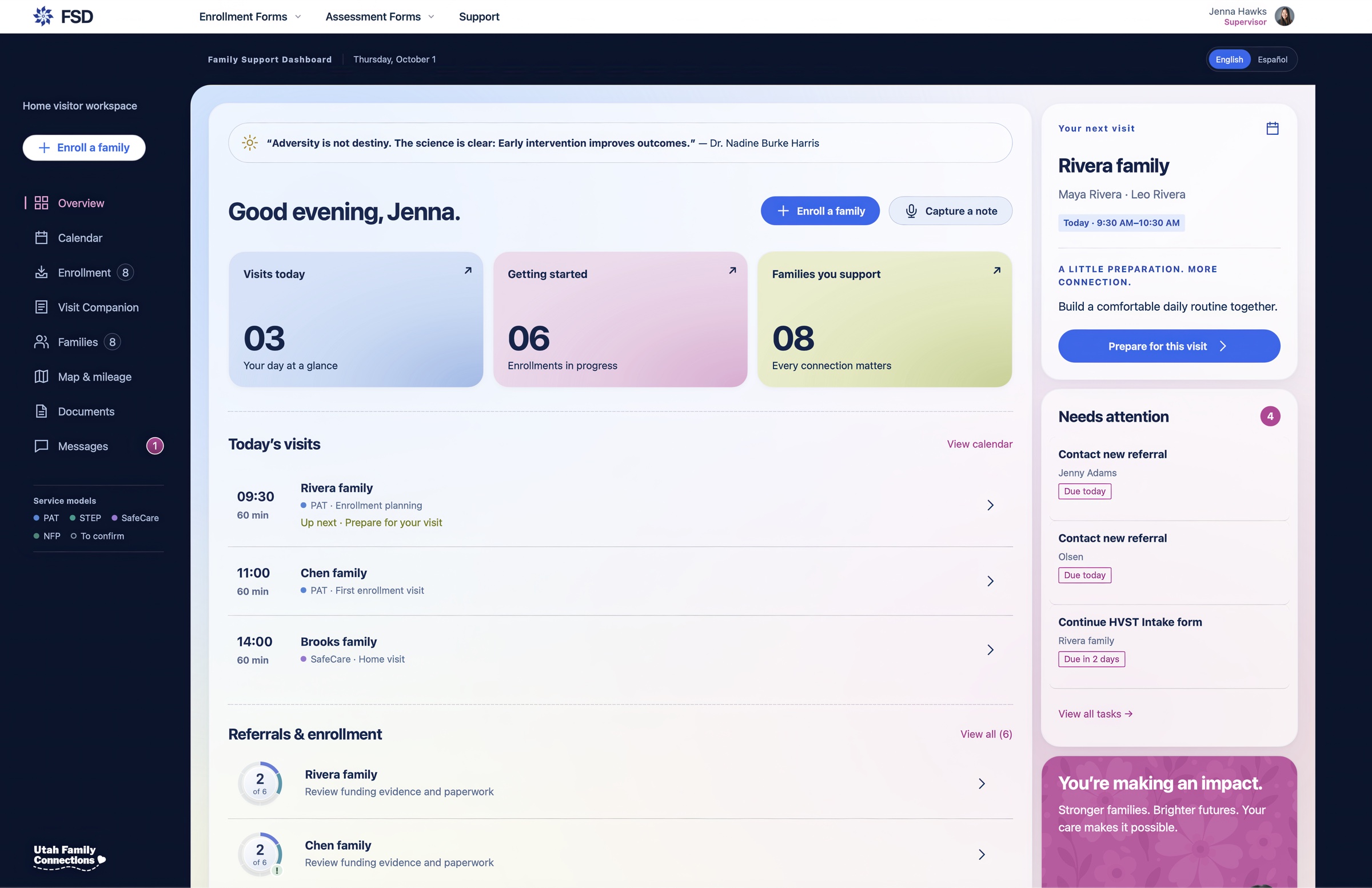
Dr. Nadine Burke Harris’s work brings attention to childhood adversity and toxic stress. Trauma-informed care emphasizes safety, trust, and collaboration, principles that matter when designing how people share information and seek support.
Explore ACEs Aware and Dr. Burke Harris’s work ↗
Understanding ACE scores in context+
Adverse Childhood Experiences (ACEs) are potentially traumatic experiences during childhood. An ACE score counts reported categories of adversity, not how often an experience occurred or how severe it was. It does not capture a person’s strengths or protective relationships, provide a diagnosis, or determine their future.
For teams working with ACE screening, scores belong within a broader, trauma-informed assessment by appropriately trained professionals, with attention to consent, privacy, current needs, and available support. Our design perspective keeps the person and family context at the center; FSD does not currently offer ACE scoring or clinical interpretation.
Read more: ACEs Aware screening guidance and the American Academy of Pediatrics on trauma-informed care.